-
One Tank, Two Speeds, Infinite Possibilities: A New Chapter in High-Viscosity Processing
The global market for high-viscosity products—from lithium-ion battery slurries to medical-grade adhesives and plant-based meat pastes—is growing at double-digit rates. Yet the equipment used to mix these materials has changed little in three decades. That stagnation is ending with the rapid adop...Read more -
From Dead Zone to Live Batch: How Opposite Rotation Solves a Century-Old Problem
For over a hundred years, mixing engineers have documented a frustrating phenomenon: in any cylindrical tank with a central agitator, there exists a region where the fluid simply rotates with the impeller, doing little more than moving in circles. This “dead zone” or “solid-body...Read more -
The Silent Revolution: Why Your Old Mixer Can’t Handle Tomorrow’s Formulations
As formulators push the boundaries of material science—creating ultra-high-viscosity battery pastes, silicone sealants, and carbon-fiber-reinforced compounds—the humble mixing tank has become a bottleneck. Traditional single-shaft mixers, even with helical ribbons, struggle to achieve macro-scale...Read more -
Two Shafts, One Mission: Taming the Thickest Fluids on Earth
Industrial processing engineers have long struggled with a stubborn fact: when a fluid is thick enough to crawl, conventional mixers simply give up. That challenge has now met its match in a new class of mixing equipment built around a dual-shaft counter-rotating design. Unlike single-propeller s...Read more -
More Than Just a Pretty Polish: The Secret Life of a Hygienic Tank
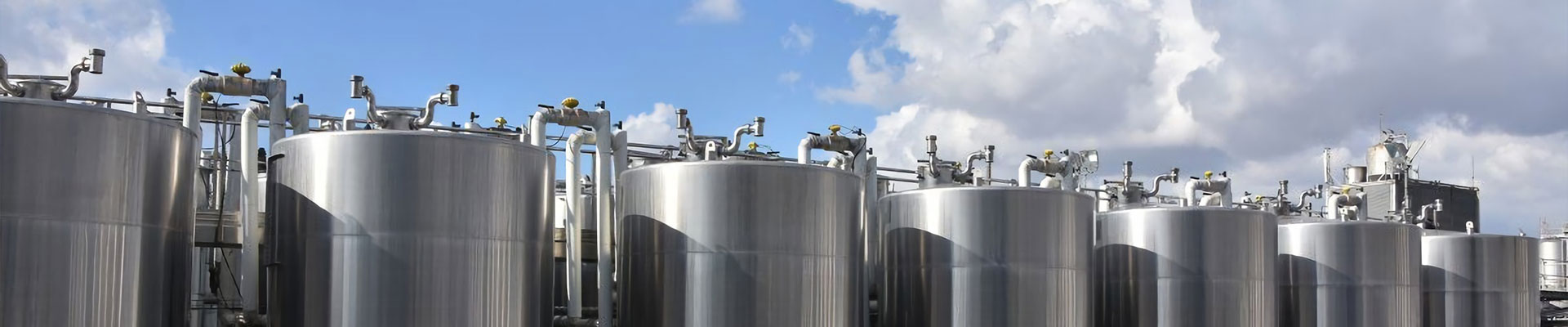
Walk into any modern dairy or brewery, and you’ll see them: towering, gleaming vessels that look almost too clean to be true. But the mirror-like finish on stainless steel food grade and hygienic tanks is far more than aesthetic. It’s a critical component of a process called “Clean-in...Read more -

Why Your Orange Juice Deserves a Five-Star Hotel: The Rise of the Stainless Steel Sanctuary
In the world of food and beverage, the journey from farm to table is perilous. Contamination can happen in a heartbeat, turning a premium batch of yogurt or a craft brew into a costly disaster. This is where the unsung heroes of hygiene step in: stainless steel food grade and hygienic tanks. Thes...Read more -

Choosing the Right Jacketed Kettle
Selecting a jacketed kettle isn’t a one-size-fits-all decision. Key considerations include: Capacity and Batch Size: How much product do you need to produce per cycle? Heating Medium: Do your processes require the intense heat of steam or the gentle control of water? Agitation: Do you need ...Read more -

The Magic of the Jacket: Key Benefits
Why go through the trouble of this double-walled design? The benefits are substantial: Unparalleled Temperature Control and Uniformity: The single greatest advantage of a jacketed kettle is its ability to provide consistent, even heating. By eliminating direct contact with a high-temperature elem...Read more -

The Jacketed Kettle: The Unsung Hero of Consistent, High-Quality Food Production
In the world of food and beverage manufacturing, consistency is king. Whether it’s a rich, velvety chocolate for dipping, a perfectly textured fruit preserve, or a savory sauce for a ready-meal, the goal is always the same: to produce a product that is identical in taste, texture, and quality, ba...Read more -

The pressure vessel reactor is a cornerstone of modern industry:
Chemical & Petrochemical: Producing ammonia for fertilizer, synthesizing plastics like polyethylene, and cracking heavy oil into gasoline. Pharmaceuticals: Manufacturing the complex molecules that become Active Pharmaceutical Ingredients (APIs), where precise control is a matter of purity and...Read more -

Types of Pressure Vessel Reactors in Action
Batch Reactor: The classic “add, react, empty” vessel. Highly flexible, it’s ideal for producing multiple products in the same equipment or for complex, multi-step processes like pharmaceutical synthesis. Continuous Stirred-Tank Reactor (CSTR): Reactants are continuously fed in,...Read more -

The Anatomy of a Reactor: Key Components
While designs vary, a standard agitated pressure vessel reactor consists of several critical components: Vessel Shell: The main body, typically a cylinder with domed ends (dished heads), a shape proven to withstand internal pressure most effectively. Agitator/Impeller: The “spoon” tha...Read more